Debunking Common Myths About Tarot Card Readings


Understanding the Origins of Tarot
Tarot card readings have been around for centuries, yet many misconceptions persist about their origins and purpose. Contrary to popular belief, tarot cards were not initially designed for mystical purposes. They originated in the 15th century as a card game in Europe. It wasn't until the 18th century that tarot cards became associated with divination and the occult.

Today, tarot is used by many as a tool for self-reflection and personal insight, rather than a method for predicting the future. Understanding this history can help dispel myths and highlight the true value of tarot readings.
Myth: Tarot Predicts the Future
One of the most common myths is that tarot cards can predict the future with certainty. However, tarot is not about foretelling unavoidable outcomes. Instead, it offers guidance and prompts introspection, helping individuals explore different possibilities and perspectives.
Tarot readings are inherently interpretive, meaning they are open to the reader's intuition and the seeker's circumstances. This personal interpretation is what makes each reading unique and valuable.
The Role of the Reader
Another misconception is that the reader holds all the power in a tarot session. In reality, a good reader acts as a facilitator, guiding the seeker through the cards' meanings and encouraging them to draw their own conclusions. The seeker plays an active role in interpreting the messages and applying them to their life.
Myth: Tarot is a Supernatural Practice
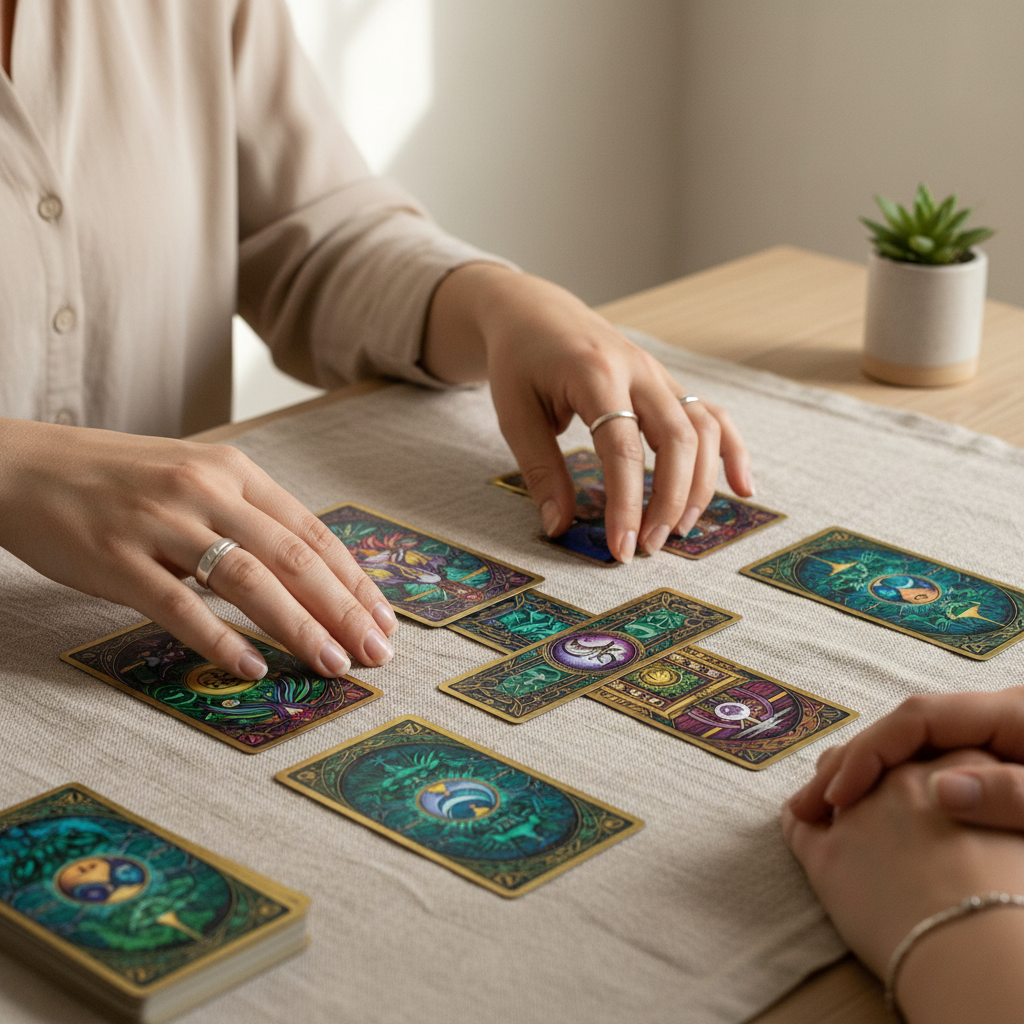
Many people associate tarot with the supernatural. While tarot can be a spiritual tool for some, it is not inherently magical. Tarot cards are simply a deck of illustrated cards, and their power comes from the meanings and insights we assign to them.
For those who view tarot as a psychological or introspective practice, it can be a powerful way to uncover hidden thoughts and emotions, leading to personal growth and self-awareness.
Understanding Symbolism
Tarot cards are rich with symbolism, and understanding these symbols can enhance a reading. Each card has a variety of meanings that can change based on its context within a spread. This layered symbolism allows for deep exploration and discussion.
Myth: Tarot is Only for the Superstitious
Some people believe that only the superstitious turn to tarot, but this couldn't be further from the truth. Many individuals from diverse backgrounds use tarot as a tool for reflection, decision-making, and understanding complex emotions.
The inclusive nature of tarot means it can be adapted to personal beliefs and values, making it accessible to anyone seeking insight, regardless of their stance on superstition or spirituality.
Using Tarot for Personal Growth
Ultimately, tarot is a versatile tool that can aid in personal development. By debunking these common myths, individuals can approach tarot with an open mind and discover its potential for fostering self-awareness and empowerment.